Monday, November 12, 2012

The importance of the Sabbath


            Most people would agree that at least some of the Ten Commandments have value. Do not murder. Do not steal. They make sense - whether you belong to the Judeo-Christian tradition or not. But then there are others that apparently seem worthless. And at the top of that list might be keeping the Sabbath. Even Christians often don't do a good job of following that one. And many people would barely give it a thought.
            But there are good reasons why we should start taking this commandment seriously again. I'm not talking here from a religious perspective. Like do not murder and do not steal, it makes sense - whether you're a Jew, Christian, Sikh, Agnostic or Atheist. Keeping the Sabbath contributes to the wellbeing of ourselves, our communities and the earth.
            But in order to understand why we should take this commandment seriously, we need to really understand what the Sabbath was for. Yes, it was for worshipping God. And from a Judeo-Christian perspective, that's important. But as I'm suggesting it's beneficial for everyone, regardless of religious affiliation, there has to be more to it than that. In fact, I think one of the reasons why this is the most neglected commandment is that we have narrowed it down to just worshipping God, which is even narrowed down further to 'going to church'. Christians believe they're obeying the commandment if they go to church on Sundays. People who don't accept the Judeo-Christian God figure they don't go to church and therefore it doesn't apply. But the Sabbath is meant for so much more than that.
            The next thing we can say about the Sabbath is it is a day when we do not work. For some, this meant a whole heap of rules about what could and couldn't be done on the Sabbath. For others, it simply meant not doing paid work. In my opinion, both miss the point. And neither approach actually considers what the Sabbath is for.
            So what is the purpose of the Sabbath? Besides worshipping God, we might also say its purpose is to rest. And this rest is not just something we should do ourselves, but something we must let others do. Exodus 23:12 says that on the Sabbath it is not just we ourselves who must rest, but also oxen, donkeys, servants and migrant workers. And just before that it says that after every seven years, the land itself must rest. The Sabbath is not just about us. It's about letting everyone rest. It's about letting the earth itself rest.
            But what might this mean in a 21st century context, where most of us don't have oxen or donkeys or servants or migrant workers? Well the point is not really about the oxen or the donkeys or the servants or the migrant workers. It's that everyone and everything (including animals and the earth) needs a chance to rest. And if we do want to think about it in a 21st century context, we need to ask what drain we are making on other people and the land? Could we perhaps replace servants and migrant workers for the people we expect to be working in stores on Sundays? Could we replace oxen and donkey for the electricity we are constantly using? Does everything always have to be in production mode for us or are we willing to give things a break?
            Thinking about the Sabbath in this way, rather than just as something we ourselves personally must do, makes us realise that rest is not just the cessation of work. Keeping the Sabbath should benefit everything and everyone. The commandment to keep the Sabbath then is not just a prohibition to work, but a commandment to participate in the benefits that Sabbath-keeping brings.
            To rest on the Sabbath may mean 'not doing certain things', but it also means to do others. We take a break from the type of things that produce goods, make money and drain the earth's resources and instead we participate in other types of activities - the kind of activities that refresh and renew us and that do not put unnecessary burdens on others.
            The inclusion of everything in the Sabbath rest also shows us that everything must have a chance to simply be. In fact, if we go back to the original day that God rested in the creation story, we can see that for seven days God created things and then he rested. This does not just mean that God stopped working. It also means that Creation, which was changing, becoming, progressing, doing, also got a chance to simply be. It no longer had to become something or do something.
            To say what constitutes rest and work is difficult because what is hard work for someone may mean rest and recreation for someone else. But if we are to truly keep the purpose of the Sabbath, we do need a break from anything that stresses us and frustrates us, and we need to choose instead those things that renew and refresh us. We also need to realise that we don't need to be constantly doing something. We just can stop, breathe and appreciate.
            The Sabbath then becomes a time when we stopping putting unnecessary demands on the earth. It becomes a time when we stop expecting so much from other people and simply enjoy their presence. It also becomes a time when we give ourselves permission to take a break from our to-do lists, to relax and laugh and appreciate the world around us.
            Perhaps the reason why the commandment to keep the Sabbath is so neglected is that we don't like simply being. We like to be achieving things, doing things, going somewhere or making progress. And we judge things (and people) on how useful or productive they are. The Sabbath not only gives us a break from this type of mentality, but it shows that people, animals and the earth have value in and of themselves. They don't need to be doing something to be important. And nor do we. Just to be is enough.
            The importance of the Sabbath commandment may not be as evident as do not murder or do not steal, but it is important nonetheless. When we stop making demands on the land, on others and on ourselves, when we value everything and everyone for what they are not what they do, we and the whole earth community flourishes.
            Keeping the Sabbath wasn't just a commandment designed to get people worshipping God. Like many of the other commandments, it would benefit the community and the individuals within it. While we may have different opinions on the importance of the Sabbath, many of us can agree that the wellbeing of ourselves, our communities and our planet is important. Keeping the Sabbath helps us do this - whether we believe in God or not.


Wednesday, November 7, 2012

Accepting Limitations


We all have limitations or things in our life that we don't like. The general tendency is to try and change these things. Sometimes that's a good approach for some things need to be changed. But often this change is aided by consumer products and services. And consumerism itself fuels our dissatisfaction with our lives. And it is that dissatisfaction that also prevents us from accepting the limitations of the earth.

While listening to a prison chaplain talk about his experiences the other day, the phrase 'life sentence' jumped out at me. The thought of someone who can never get what he wants (freedom), and needs to accept his situation will last for his entire life, seemed quite terrible to me. How would he find joy, peace and hope? The only way he could find any degree of contentment would be if he learned to accept his situation. Fighting against it and wanting to be free would only make him miserable.

Christians often use prison cells as a metaphor for breaking free of certain things in our life. And it can be quite a good metaphor. There are some things we need to break free from. However, if we see everything as a prison cell that we do need to break free from, then maybe we lose our ability to find peace, joy and hope where we are. Maybe we are too busy fighting our cells that we miss the opportunity to appreciate what we do have and work within our limitations.

Nowhere is the dissatisfaction with our lives more apparent than in the area of appearance. Got brown hair and want blonde? Dye it. Got brown eyes and want blue? There's coloured contacts for that. Don't like your boobs or your nose or your face? Get plastic surgery. I could go on but you get the picture.

Consumerism fuels this dissatisfaction with the way we look. The more dissatisfied people are with their appearance, the more consumer products and services they buy. But it also makes us unwilling to accept any aspect of our appearance we don't like - even the ones we can't change. I admit, I've sometimes felt hard done by because God didn't make me tall, blonde, slim and beautiful. When I do that, I not only end up frustrated and discontent, but I ignore all the very good qualities God has given me. I'm too busy looking at what I don't have and what I want to see changed.

Let's look at something completely different - comfort. If we're unwilling to accept anything we don't like, then we must be comfortable all of the time. When we exercise, we prefer to be in air-conditioned, enclosed gyms rather than out in the outdoors. We like outings where all the unpleasantness has been taken away. Our houses must be perfectly comfortable. We don't like to be too hot or too cold. We're no longer willing to accept the limitations of the weather or the seasons. So we crank up our air-conditioner to achieve the desired temperature. All of this uses energy.

And speaking of energy, we are also not willing to accept the limitations of the planet. Our desire to change our life and situation - through the consumer products we buy and the energy we use - often has a detrimental effect on the earth. But rather than limiting our impact, we demand that the earth continue to give us what we want to make our lives as "perfect" or as "easy" as possible. And we pretend that it will always do so.

It won't. The earth is a prison cell. Oh yes, it's a beautiful prison cells. It has wonders and delights and can give us everything we need if we take care of it. And it's not the kind of prison cell I want to break free from. But it's a prison cell in the sense that there's nowhere else to go. Humanity doesn't get to escape from earth. We are stuck here.

And we can pretend that the limitations of this earth don't exist. We can refuse to accept them or fight against them. But none of this will do any good. Those limitations will still be there.

Or we can learn to live within those limitations. We can appreciate what we do have, but realise there are limits to it. And when we do learn to live within those limitations, we are more likely to find joy, peace and contentment. We are also more likely to appreciate what we do have and want to take care of it.

Acceptance is not a popular trait in our society. But for the sake of the earth and our own wellbeing, we must cultivate it. Yes, there will be things in our life that we don't like. Yes, there will be limitations imposed upon us that we want to break free from. But life should be about accepting those limitations, rather than believing we must get everything we want.

I have linked our refusal to accept limitations to consumerism. But while I certainly think consumerism has made this human inclination worse, it is not limited to consumerism. The bible tells us that Adam and Eve were given access to every tree and plant in the Garden of Eden except one. Rather than accepting that limitation, they ate the forbidden fruit.

How many of us have thought, if I was in the Garden of Eden, I'd be happy with what I had? Really? We don't seem so happy with what we have at the moment. We're always wanting more, always wanting to change things, always refusing to accept the limitations placed on us.

And to say we don't live in the Garden of Eden is not an excuse. Yes, the Garden of Eden was filled with good things. But so are our lives now. The world is amazing place. Our lives are filled with so many gifts from God. We have nature and relationships and bodies that are just incredible. We have joy and delight and wonder. There is so much to be thankful for.

Let's not ruin what we do have. Let's appreciate it and take care of it. Let us work within the limitations of the earth. And let us cultivate those traits of acceptance and gratitude. There may be things in our lives and our world that we don't like. But if we learn to accept what we do have, we will also learn that there is much in our lives and our world that we love. There is much in our lives and our world that we should appreciate and preserve.


 This post was also published on my other blog, God and Gum Nuts (http://godgumnuts.blogspot.com.au/2012/11/accepting-limitations.html) 

Wednesday, October 31, 2012

Hope for Australia - I have a dream


Last Sunday at church, we were asked in groups to give three to five words on what gave us hope for Australia. I didn't really get a chance to speak during that time - partly because of the dynamics of the group, but also because, at first, I struggled to find anything in Australia that gave me hope.

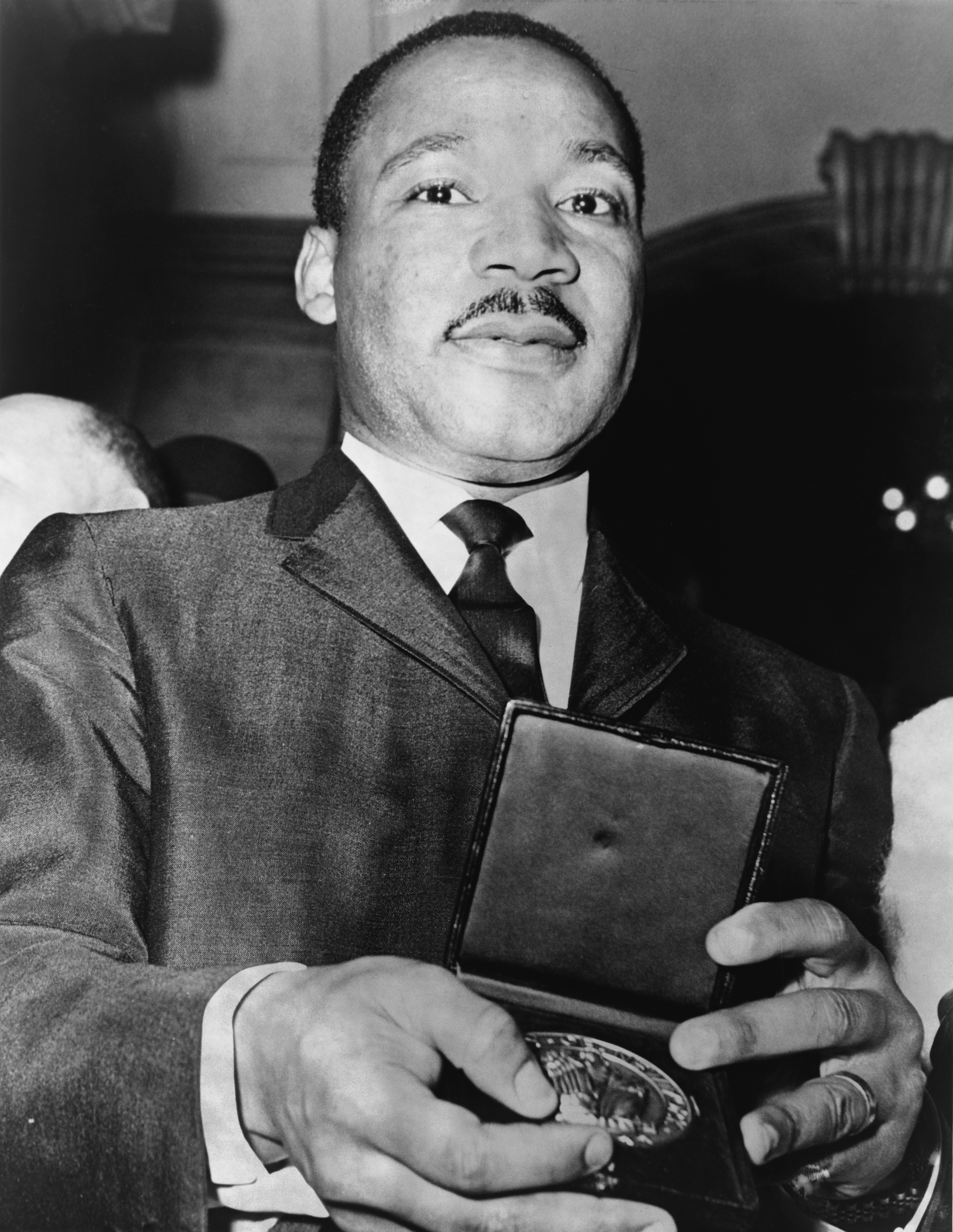
But I've been thinking about it all week and I've finally come up with my three to five words. They're a bit different to the words that other people were providing. They gave words for three to five different things. Well I'm giving three to five words that make up a phase. And it's a phrase is borrowed from Martin Luther King Jr.

What gives me hope for Australia? I have a dream. Or to change it to three words and make it more specific to Australia: Australians have dreams.

A dream is the ability to imagine a different world. It doesn't just say 'Well this is the way the world is', it asks 'How might the world be changed?' It doesn't just accept injustice and suffering. It envisions a world without them. It doesn't look at the problems in the world and despair. It sees its potential to become something new and something better.

Dreams can become just wishful thinking. But when Martin Luther King Jr said he had a dream, he wasn't just talking about something to fantasise about. Nobody expected that Martin Luther King Jr would be happy just to close his eyes and imagine that different world. He was going to do everything he could to see that world happen.

Dream can also appear to be unrealistic. The bigger the dream, the more idealistic people are, the more likely people are to scoff at them and say 'that will never happen'. People with dreams can often seem like they're too focused on the way the world might be that they've lost touch with the way the world actually is.

But it is an understanding of what actually is wrong with this world that encourages us to dream. We don't dream because we think the world is perfect and rosy. We dream because we know it is not.

And to dream doesn't mean we expect that dream to happen exactly as we want it to. To dream is not to say 'This is the way the world will be one day'. But it is to say 'This is the way I want the world to be, so let's do everything we can to get as close to that as possible.'

And dreams take a long time to come to fruition. Martin Luther King Jr's dream has come a long way. But has his dream been realised in every aspect? I would say no. It still has some way to go.

I would say that dreams have to be unrealistic. If we're dreaming of a world that seems possible, then we're not dreaming big enough. And yes, if our dreams are too big and too unrealistic, then we may have to wait a long time to see them come true (and they probably won't come true in our lifetime). But if we make our dreams too little, then we're limiting the potential of what this world might become.

When Jesus spoke of the Kingdom of God, it sounded like the kind of big, unrealistic dream that will never happen. Two thousand years later and it still hasn't happened. But that doesn't mean we stop dreaming (and hoping) for that Kingdom of God. It's a dream worth pursuing. And dreams worth pursuing need to remain dreams for however long it takes.

Furthermore, while the Kingdom of God may not be here, we know it is coming and we know it is already happening. The Spirit of God is at work bringing us to that future and bringing that future to the present. It may sound like just a dream. But as Christians, we have the awesome privilege of being part of that dream and helping see that dream happen.

When we believe in a God who is at work in the world, bringing everything to its final consummation, then we realise that dreams really will come true. And we know they are already coming true - right here and right now.

So what gives me hope for Australia? The fact that there are Australians who are dreaming. There are Australians who are imagining a better world. And there are Australians who aren't prepared to just close their eyes and fantasise about this better world, but are actively working to make that world a reality.  

AddThis

Bookmark and Share

Blog Patrol