Wednesday, October 31, 2012

Hope for Australia - I have a dream


Last Sunday at church, we were asked in groups to give three to five words on what gave us hope for Australia. I didn't really get a chance to speak during that time - partly because of the dynamics of the group, but also because, at first, I struggled to find anything in Australia that gave me hope.

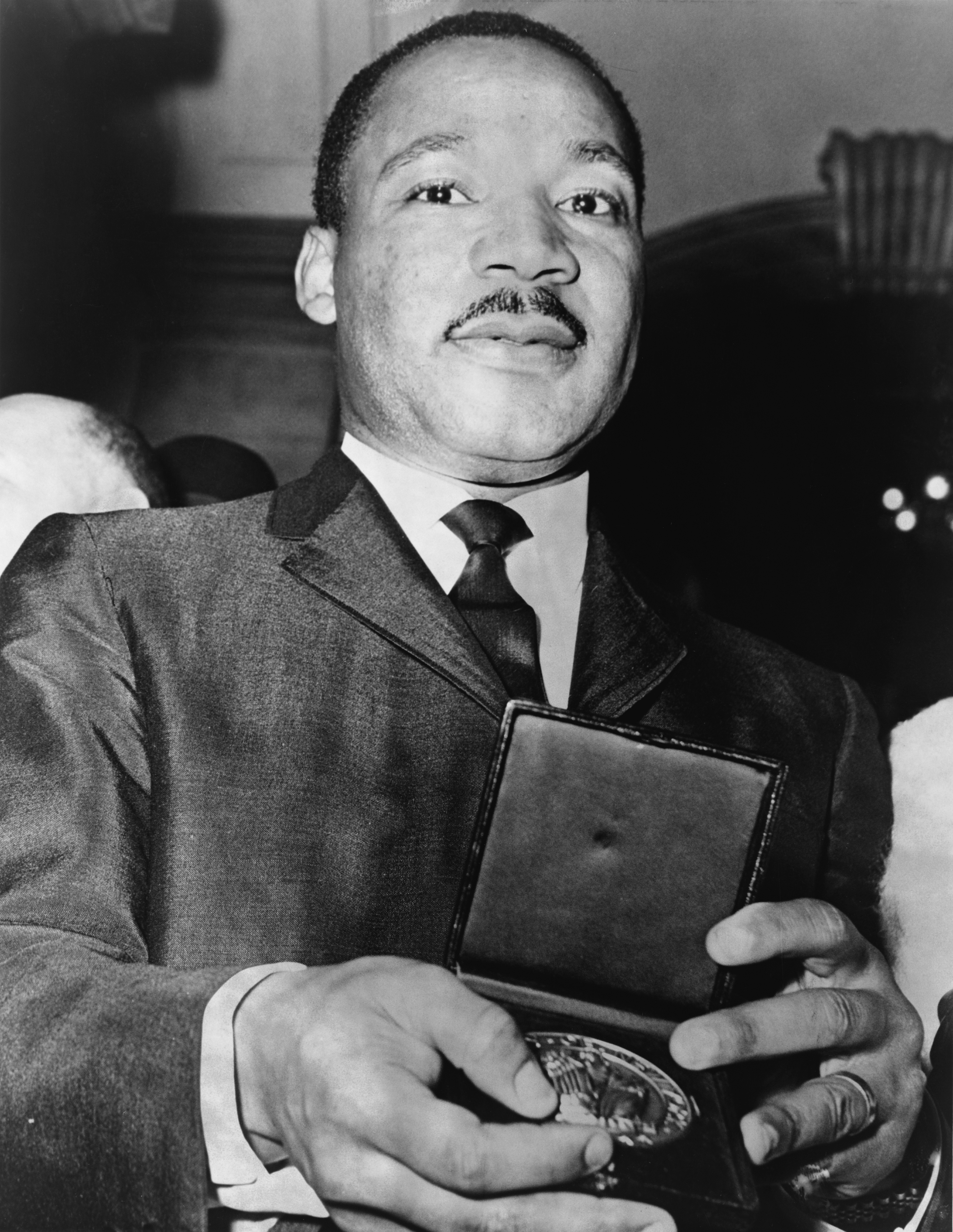
But I've been thinking about it all week and I've finally come up with my three to five words. They're a bit different to the words that other people were providing. They gave words for three to five different things. Well I'm giving three to five words that make up a phase. And it's a phrase is borrowed from Martin Luther King Jr.

What gives me hope for Australia? I have a dream. Or to change it to three words and make it more specific to Australia: Australians have dreams.

A dream is the ability to imagine a different world. It doesn't just say 'Well this is the way the world is', it asks 'How might the world be changed?' It doesn't just accept injustice and suffering. It envisions a world without them. It doesn't look at the problems in the world and despair. It sees its potential to become something new and something better.

Dreams can become just wishful thinking. But when Martin Luther King Jr said he had a dream, he wasn't just talking about something to fantasise about. Nobody expected that Martin Luther King Jr would be happy just to close his eyes and imagine that different world. He was going to do everything he could to see that world happen.

Dream can also appear to be unrealistic. The bigger the dream, the more idealistic people are, the more likely people are to scoff at them and say 'that will never happen'. People with dreams can often seem like they're too focused on the way the world might be that they've lost touch with the way the world actually is.

But it is an understanding of what actually is wrong with this world that encourages us to dream. We don't dream because we think the world is perfect and rosy. We dream because we know it is not.

And to dream doesn't mean we expect that dream to happen exactly as we want it to. To dream is not to say 'This is the way the world will be one day'. But it is to say 'This is the way I want the world to be, so let's do everything we can to get as close to that as possible.'

And dreams take a long time to come to fruition. Martin Luther King Jr's dream has come a long way. But has his dream been realised in every aspect? I would say no. It still has some way to go.

I would say that dreams have to be unrealistic. If we're dreaming of a world that seems possible, then we're not dreaming big enough. And yes, if our dreams are too big and too unrealistic, then we may have to wait a long time to see them come true (and they probably won't come true in our lifetime). But if we make our dreams too little, then we're limiting the potential of what this world might become.

When Jesus spoke of the Kingdom of God, it sounded like the kind of big, unrealistic dream that will never happen. Two thousand years later and it still hasn't happened. But that doesn't mean we stop dreaming (and hoping) for that Kingdom of God. It's a dream worth pursuing. And dreams worth pursuing need to remain dreams for however long it takes.

Furthermore, while the Kingdom of God may not be here, we know it is coming and we know it is already happening. The Spirit of God is at work bringing us to that future and bringing that future to the present. It may sound like just a dream. But as Christians, we have the awesome privilege of being part of that dream and helping see that dream happen.

When we believe in a God who is at work in the world, bringing everything to its final consummation, then we realise that dreams really will come true. And we know they are already coming true - right here and right now.

So what gives me hope for Australia? The fact that there are Australians who are dreaming. There are Australians who are imagining a better world. And there are Australians who aren't prepared to just close their eyes and fantasise about this better world, but are actively working to make that world a reality.  

Thursday, September 27, 2012

Discovering God (in nature)


When people talk about becoming a Christian, the term sometimes used is 'finding Jesus' as though Jesus were hiding somewhere and one only has to look in the right place to find him. In fact, a number of cartoons have illustrated this possibility, with Jesus hiding somewhere behind a curtain or a couch.

Putting the emphasis on Jesus indicates that the only way to 'find' God is by 'finding' Jesus. You may feel spiritual, you may seek to know God, but until you 'find Jesus' it is actually you who is lost.

The other thing this term does is make 'finding Jesus' a one-off event. When you find something, you've found it. No further looking is required. Of course, you may lose it again and then have to find it for a second time. But there are times when you have 'found' something and times when you haven't, with no middle ground. You can't half find something and once you've found it you don't keep looking. It's either found or not.

Despite the claims of many born-again Christians, I don't believe that 'finding God' can be so neatly differentiated into a before and after stage. Rather than a game of hide'n'seek, it is an ongoing journey. We are continually seeking and continually finding. The word 'discovering' therefore seems more appropriate to me than 'find'.

Furthermore, God is not just discovered by Christians, but people who aren't Christians are continually discovering him too. This includes not just people of other religions - but also agnostics and even atheists - although they may not recognise what they have discovered is God.

In The Mind of God, Paul Davies[1] says: 'even hard-nosed atheists frequently have what has been called a sense of reverence for nature, a fascination and respect for its depth and beauty and subtlety, that is akin to religious awe.’ That to me sounds very much like the process of discovering God.

And while I believe God can be discovered in many different places - in religion, in relationship, in receiving kindness from others, in feeling solidarity with others, in feeling compassion for all living creatures, in seeking to correct injustice - it is in nature that I believe many people do find God.

Nature is incredibly beautiful and incredibly complex. That in itself often causes people to think about the reason behind it all. While not everybody will come to the conclusion that that 'reason' is God, many will - even if they reject religion. And even those who do not believe that God had anything to do with it, the very act of thinking about that 'reason' is part of discovering God.

If I stand in front of the Mona Lisa, and I think about the one who painted it, I am at least partly discovering Leonardo Da Vinci - even if I come to the conclusion that the painting occurred by someone accidentally throwing paint onto a canvas which just happened to land in such a way that the Mona Lisa face appeared.

Secondly, the beauty of nature often is so breathtaking that all we can do is stand in awe. To stand in awe of what God has made is to discover God. To feel wonder and delight and joy while looking at God's Creation is to feel part of the same wonder and joy and delight that God feels. Although, as finite beings, we will only feel that wonder and joy and delight on a limited scale, when we are truly captivated by nature I believe we sense for just a moment a tiny portion of what God feels. It seems we are raised just a little bit above our finitude and humanness.

Something else we often sense in nature in peace. Partly, this is because nature is soothing. There is a reason why when people want to relax, they listen to CDs of bird calls rather than CDs of bulldozers. Discovering that peace is part of discovering God.

So too is the recognition that we are not just individuals but part of the community of Creation. Nature often brings peace because it helps us forget about ourselves. We are lost in the moment and our own concerns are either forgotten or become less significant.

It is hard to discover God when we are solely focused on ourselves. Being in nature often turns our focus outward. The 'I' as an individual is enveloped in the 'we' of Creation. We are then able to see not just that we are part of a larger picture, but how we might act in ways to help that larger picture. Discovering God is not just about saying, 'Yes, I've found Jesus' and now I can put him on the mantelpiece along with my rock collection to stare at. It is about discovering his will, not just in our lives, but in the whole of Creation, and helping to see God's will be done.

I don't think God can ever be 'found'. Human beings will never be able to completely understand him or completely know him. We can't put him in a box, label him and store him somewhere safe so we can't lose him again. But we can catch glimpses. We can come close. We can have moments when we seem to rise briefly above our human nature. And we can keep looking and discovering, knowing the journey will never end, that there will always be new things to find and new things to search for - and that's what makes the faith journey so exciting.


Davies, Paul. The Mind of God; Science and the Search for Ultimate Meaning. Maryborough, Victoria: Penguin Books, 2008.


[1] Paul Davies, The Mind of God; Science and the Search for Ultimate Meaning (Maryborough, Victoria: Penguin Books, 2008).


Monday, September 17, 2012

Social Justice and Consumerism


One of the problems with consumerism is we often don't see the stories behind the products that we buy. And with more and more of our products made and sold by multi-national corporations, with much of their manufacturing taking place offshore, those behind-the-scenes stories are becoming less and less visible.

Yet those stories are important. And this year's Social Justice Sunday, taking place on 30 September with the theme Peace in the Marketplace, reminds us that consumerism often contributes to injustices, inequities and suffering.

We need to be reminded of the harsh and unfair conditions that people in Third World countries work under in order to produce our goods. We need to consider the impact that our purchases are having on the environment. And we need to reflect on what consumerism is doing to ourselves, not just in terms of employment practices that maximise profit and leave employees worse off, but also in terms of seeing life through a framework that values individuals over relationships and community, that leaves people feel worthless because they do not earn enough money or own the right things and that leaves almost all of us in a constant state of dissatisfaction because the advertisers keep persuading us there is something else we need to be happy.

Social Justice Sunday also reminds us that, while many people in our society see economic growth and consumerism as desirable, that is not the only possible view. Considering the negative impacts economic growth has on the environment, on people and on communities, maybe it is time we looked for a new over-arching framework, a new way of living in and seeing the world.

The Church must be a prophetic voice in this consumeristic, growth-driven culture. It must be prepared to show how our economic structures are damaging the earth and hurting people. It must be prepared to say there are more important things than profit, growth, money and purchases. It must be prepared to challenge the power of corporations and the way they conduct business. And it must show the world a different way, a way that values relationships, communities, peace and wellbeing, a way that puts people before profits, the earth before purchases.

The bible shows us that God cares about unfair economic structures. Therefore, Christians should care about them too. It is not an excuse to say we didn't know. We must make it our business to know. And if we really do care about seeing God's will done on earth, then once we know, we must do something about it.

The National Council of Churches in Australia has a pamphlet and worship resources on its website (http://www.ncca.org.au/departments/social-justice) for Peace in the Marketplace, Social Justice Sunday, 30 September. This wonderful prayer, based on the Beatitudes, comes from those resources.

‘Blessed are you who are poor,
      for yours is the kingdom of God.’

God of the poor,
We hear your voice calling us to the reality of life in our land, in the country and in our cities.
The goodness of your creation has been twisted out of shape by the greed of people.
The land lifts up its voice in mourning, and the poor of the land cry out for justice.
Help us live out your just kingdom here in this part of the earth.

‘Blessed are you who are hungry now,
     for you will be filled.’

God of the hungry,
Our indigenous brothers and sisters still struggle with worse health
and lower life expectancy than the rest of our population;
asylum seekers still wait months and years for settlement in safety;
the elderly, ill and unemployed struggle to live on pensions.
Help us know how to share our resources wisely and generously
so that all may be filled.

‘Blessed are you who weep now,
      for you will laugh.’

God of the desolate,
Young girls are exploited to sell fashion clothes,
while women slave in sweat shops for minimum wages.
Men work long hours at dangerous jobs
and young people turn to drugs and alcohol to cover their hopelessness.
We in the developed world enjoy our luxuries
at the expense of those who struggle to make a living growing them.
Help us protect the humanity of those who produce the goods we use.

‘Blessed are you when people hate you,
     and when they exclude you, revile you, and defame you.’

God of the marginal,
Governments appear to favour those with economic power,
instead of investing in education;
megastores drive small businesses to the wall;
people deafened by the strident call to consume
fail to hear the whispers of the homeless and hungry.
Help us to speak fearlessly for those with no voices,
and to remember that your grace is abundant enough for all to share.

‘Rejoice in that day and leap for joy,
     for surely your reward is great in heaven.’

God of joy,
We pray that we who follow the way of Christ might live by your grace,
modelling care and integrity in our business transactions,
courage and hope in our politics,
and love and reconciliation in our relationships.

May our lives be evidenced by generosity,
daring to live in hope,
that our life together might point beyond ourselves
to the One in whose image we are made.
In the name of Jesus Christ, who showed us how to live. 
Amen.


Acknowledgement: These worship resources have been compiled by Rev Dr Meryl Blair for use with the Social Justice Sunday 2012 resource Peace in the Marketplace.

AddThis

Bookmark and Share

Blog Patrol