Wednesday, May 14, 2014

A cruel budget and a bleak future

In his budget speech, Joe Hockey said we all have to make a contribution. But when the contribution demanded from people destroys their lives, that's too high a price to pay. He said we need to stop thinking of self-interest and start thinking of the national interest. But it's not selfish to want to survive (and even prosper). And far from being in the national interest, these cuts will create a very bleak future for Australia. 

As every Australian school-child learns, European colonization of this country started with the transportation of convicts. At least some of those convicts were sent here for stealing because they had no other means of survival. The question I always ask myself when I look back at that history is would I steal in order to feed my family? The answer unequivocally is yes. It was purely a hypothetical question as I knew that would not happen in Australia. We had the safety nets in place to ensure it didn't. Well we used to. The latest budget has taken those safety nets away. 

Joe Hockey has announced that people under 30 will have to be unemployed for six months before receiving Newstart. Six months without money is a very long time. That's six months without being able to pay for rent, phone, internet, electricity, bus fares, petrol, food, clothes or even tampons. In six months, you can be thrown out of your home - in fact, you probably will be thrown out of your home if you can't pay rent. In six months, In six months, you can become severely depressed and suicidal - compounded by the fact you can't afford to go to a doctor and seek medical attention. In six months, your entire outlook can change, you can lose all hope and get stuck in a mindset that never goes away. Six months without money is enough to ruin a life. 

So what are these people meant to do for this six months? Tony Abbott and Joe Hockey's answer would be to find a job. But finding a job is actually a lot harder with no money. Imagine looking for a job when you can't afford a newspaper or the internet to apply for jobs (and yes, I know job seeker centres and the library offer free access to newspapers and internet, but these can also be hard to get to for some people without money for a bus.) Imagine looking for a job when you don't have a phone, address or easy access to your email for potential employers to contact you. Imagine applying for jobs when you have no car and/or no ability to afford petrol or bus fares (which not only affects your ability to get to job interviews, but your ability to get to a job once you find one). Imagine going to job interviews when you have no money for clothes, shoes, haircuts, razors to shave if you're a man or make-up (which is almost a necessity in some jobs) if you're a female. Imagine applying for jobs when your confidence is low and your depression is high (and it would take a very optimistic person for this not to occur after having no money for so long).

So if getting a job is made harder for them, what actually happens to these people. And what happens to Australia? As already alluded to, crime rates will probably go up. If people need to steak to eat, they will steal. The threat of jail will also not be as much of a deterrent to those with no roof over their head and no food on the table. Depression is likely to rise and this may very well lead to more suicides, as people cannot afford the treatment they need. There is likely to be more people suffering from health conditions that are made worse than they should be because people couldn't afford to seek early medical intervention. Charities are likely to be swamped by people - and may need to turn a lot of people away because they just don't have the resources to cope with the sudden influx. People are also more likely to be forced into exploitative working conditions - or make bad choices about employment and financial resources. Debt will probably rise, leaving some people in a situation that, even if they do get a job, they're still barely surviving because their debt repayments are so high. 

This does not sound like a prosperous country to me. It sounds very depressing. And I don't see how any of it is in the national interest.

I've focused mainly on young people who will lose Newstart, because theirs is the most desperate case. But the cuts to family tax benefit and changes to medical expenses will leave a lot of other people without enough money to live on. What exactly is Joe Hockey proposing they contribute? Their food, their rent, their electricity or their medical expenses. Which one of those essentials would he contribute himself to the national interest? 

It's pointless to talk about a healthy economy without asking what a healthy economy is for. By itself, it's just numbers on the page. But it is important to have a healthy economy if it serves the best interests of the society. When a healthy economy helps to build a prosperous, generous and inclusive society, then that is a good thing. But when we marginalise people and make people suffer to get that healthy economy, then something is wrong. 

The cuts announced in the budget may attack our deficit. But they also attack people - vulnerable people, in particular. It will attack - and maybe even cost - people's lives. Is lowering the deficit really worth the price of our soul? 

Friday, May 2, 2014

What would Jesus say about the Commission of Audit?

Yesterday, the Commission of Audit was released, which recommended huge cuts to government spending. While the Liberal Government has pointed out that the Commission of Audit is not the budget, it has not ruled out adopting the recommendations. Australians have already been warned to prepare ourselves for a tightening of the belts and it seems that at least some of the recommendations will be adopted.

Opposition Leader, Bill Shorten, criticised the Audit, saying it was 'a plan to make sure that families get less while millionaires get more.' I'm not an economist (or even a well-informed politician) but in reading through the summaries, that's what it looks like to me too. 

Some of the cuts include payments for visiting the doctor, changes to the Pharmaceutical Benefits Scheme and scrapping of Family Tax Part B and new means-testing for Family Tax Part A. These cuts are going to severely hurt people on low incomes - the people who can least afford them. And in some cases, for those who cannot afford medication or who find it hard to put food on the table as it is, they may have a devastating impact. It seems that growing the economy is more important than people's lives.

As I said, I'm not an economist. I haven't read the whole report. And I'm certainly not Jesus and can't claim to speak for him. But as I read through the summaries, I couldn't help wondering what Jesus would think about them. And this is my guess.

Firstly, Jesus spoke a lot about the poor. He told people to sell all they have and give it to the poor (Matthew 19:16-30, Luke 18:18-30, Mark 10:17-31). He said the Spirit of the Lord had anointed him to preach good news to the poor (Luke 4:18). He told people when they had a banquet to invite the poor (Luke 14:13). Furthermore, the bible is filled with verses about caring for the poor. You would have to ignore large chunks of the bible to avoid reaching the conclusion that God (and Jesus) care about how we treat the poor.

Therefore, it seems pretty conclusive that Jesus would not be pleased about cuts that hurt the poor. Nor would he be pleased about cuts which favour the rich at the expense of the poor. The Commission of Audit feels a bit like the opposite of the banquet Jesus speaks about - the poor are left out, while the rich are invited. So what would Jesus say? I don't know. But my feeling is it might sound something like what Jeremiah said: 'For the hurt of my poor people I am hurt, I mourn, and dismay has taken hold of me' (Jeremiah 18:21).

Jesus also cared about the sick. A large part of his ministry involved healing people. What would he say about cuts that make it hard for people to afford a doctor or get the medication they need? Again, I don't know. But I can't imagine a person who spent such a large part of his ministry healing others would want anyone to be excluded from things that heal. The bible doesn't record any example of Jesus turning someone away because they didn't have the money to pay him.

And what would Jesus say about the scrapping of Family Tax Part B and the tougher means-testing for Family Tax Part A? Well, Jesus doesn't mention those payments because they weren't around in his day, but he does mention widows. And in fact the bible has a lot to say about widows. And every single time widows are mentioned, it is not that we should encourage widows to go out and get a job. No, it's telling us to take care of them. Now people might rightly say that not all (or even most) of people on Family Tax Benefit are widows - although I might point out that some are. But the reason why the bible talks so much about taking care of widows is that they did not have the economic (or social support) of a husband. And if the bible talks so much about helping them, I think we can assume Jesus would care about anyone with kids and without a partner.

Just one more note on that, in a well-known bible passage, Jesus says that the widow who put a mite into the temple treasury gave more than all the others (Mark 12:41-44, Luke 21:1-4). It's often used to encourage people to give more to the church. But it is also says something about how a small amount can actually be huge when you don't have much money to begin with. In relative terms, cuts to the poor are bigger than cuts to people with more money. Even small decreases in Family Tax Benefit can be huge decreases when we consider what they mean to the people affected.

Another recommendation is to lower growth in the minimum wage. Jesus didn't speak at all about this. But the bible does say some things that have relevance. In Malachi 3:5, it says that God will be a swift witness against those who oppress the hired worker in his wages. Deuteronomy 24:14 says not to abuse a needy and destitute worker. Jeremiah 22:13 says it is terrible for those who make people work for nothing and do not pay them their wages. It seems clear that God cares that people get paid a decent wage for the work that they do.

Well that's my take on what Jesus might think about the Commission of Audit. I have no doubt that other Christians will reach different conclusions. But even though interpretations of the bible may vary, I find it difficult to understand how any interpretation can ignore that Jesus cares about the poor and cares for those who are hurting. And if he does, then surely he must care about cuts which hurt the poor and the vulnerable.


Proverbs 22:16 says that 'Whoever oppresses the poor to increase his own wealth, or gives to the rich, will only come to poverty.' The proposed recommendations are designed to improve our economy. Maybe they will. But they will also increase our poverty - not just poverty in financial terms of the many Australians who are already finding it hard to make ends meet - but the poverty of spirit and inclusion and compassion and engagement. We will all be poorer as a result - even if Australia's economy looks better.  

For more reading please see:


Sunday, April 27, 2014

The backlash against Christians supporting gay marriage: why we need dialogue and communication rather than condemnation and exclusion

Recently, frontline singer of well-known Christian band, Dan Haseltine, sent out tweets showing his support for gay marriage.

Now what concerns me most about this incident isn't that people disagreed with Dan Haseltine. I personally am very supportive of gay marriage, but I know many people (some of whom are my best friends) who are against gay marriage on biblical grounds. And I think any reasonable person can see why Christians would be against gay marriage (Note, I am not saying they are right, just that I can understand their perspective).

What does concern me is the whole backlash that Dan Haseltine has received after his Tweets. Some Christians (and some Christian radio stations) have decided not to play Jars of Clay music any more. There is this idea among some Christians that, if he supports gay marriage, then he's not really a Christian.

It's an attitude I've come across before. I've heard a sermon where the pastor said a a public figure couldn't possibly be a Christian because she supports gay marriage. (And yes, there were people shouting out Amens - I wasn't one of them). I've seen numerous posts and comments on Facebook where people say that anyone who supports gay marriage is not a real Christian.

And even if someone doesn't come right out and say you're not a Christian, it's implied - or at least it's implied that you're not a very good one. I've heard people say that anyone who supports gay marriage just doesn't understand the bible. I've had a former pastor start quoting bible verses about false prophets to me when I voiced my support of gay marriage. And then there's that good old chestnut 'Well, you either believe the bible or you don't.' That usually comes when people have nothing left to say and is a sign that they want the conversation to be ended.

I don't mind people disagreeing with me. I would never expect every single Christian to automatically change their mind on this issue. But what does annoy me is the idea that, if I support gay marriage, it must be because I'm either not a real Christian or I don't take the bible seriously.

I do take the bible very seriously. It's because I take it seriously that I believe we should love our neighbours (and neighbour means everyone). It's because I take it seriously that I believe we should always fight for justice. It's because I take it seriously that I believe, when people are oppressed, God cares. It's because I take it seriously that I believe God created each and every one of us and that each and every one of us has value and is special in God's eyes. It's because I take it seriously that I believe no-one has any right to judge another person.

And it's because I take it seriously that I know we cannot take the whole thing literally. It's because I take it seriously that I know it came to us through different people and different cultures. It's because I take it seriously that I know the same people who are very good at quoting the 'homosexuality' verses will often look confused when you ask them whether a woman should marry someone who rapes her (also mentioned in the bible). It's because I take it seriously that I know we cannot isolate verses, but must read every verse in the context of the whole. It's because I take it seriously that I believe the things that get mentioned again and again in the bible (like love and justice) are more important than a few commandments (amongst a whole lot of other commandments that we ignore).

Okay, you may not agree with how I read the bible. You may not agree with how I interpret the verses on homosexuality. You may not agree with the conclusions I reach.

But don’t tell me I don't take the bible seriously. And don't tell me that I just don't care what God says. And don't tell me I'm not a real Christian.

There are many different ways to read the bible. If there wasn't, we would probably just have the one denomination instead of the 33,830 denominations that currently exist (according to the World Christian Encyclopaedia of 2001 - there's probably quite a lot more now). So if we're going to start saying someone isn't a Christian because they read the bible differently to us and have different ideas, then basically we're going to end up with 33,830 separate groups of Christians who all believe they're a Christian and nobody else is.

And considering this is an issue that affects lots of people and has the power to do great harm to the LGBT community, shouldn't we at least be talking about it? This reaction that simply tells someone they're not a Christian shuts down communication. And sometimes I wonder whether that's the aim. People don't want to think about it. They don't want to consider what other Christians have to say on the issue. So they decide they're not Christians and they don't need to listen to them (or even, it seems, their music if they happen to be a lead singer of a Christian rock band).

There have been many disagreements in the church in the past - dietary regulations for the early Christians, the nature and substance of the Eucharist, whether women should be ordained - to name just a couple. And I cannot think of any disagreement which would not have benefited by more discussion and dialogue - instead of exclusion and condemnation.

And that goes for both sides. Those who are against gay marriage should listen to the people who support it and those who support it should listen to the people who are against it. And maybe we both have something to learn.

In the end, we have to decide what matters most - sticking to our own convictions or allowing God to show us the truth. And truly, what do we have to fear from just listening to people?     

You can read more about that Twitter conversation in the following articles:

Huffington Post: Dan Haseltine, 'Jars Of Clay' Lead Singer, Tweets Support For Gay Marriage  (http://www.huffingtonpost.com/2014/04/25/jars-of-clay-gay-marriage_n_5214742.html)


The Wire: Jars of Clay's Christian fans lash out after the lead singer tweets for same sex marriage (http://www.thewire.com/politics/2014/04/jars-of-clays-christian-fans-lash-out-after-the-lead-singer-tweets-for-same-sex-marriage/361256/)

Dan Haseltine's own blog post about his reasons behind the Twitter conversation (http://danhaseltine.com/blog/2014/4/25/reset-contexttangentapology.html)


Tuesday, April 22, 2014

Prioritising the love economy

In today's environment, education is slanted towards getting a career, mothers are encouraged to go back to work as quickly as possible, we want to move people from the disability pension onto Newstart and now people are encouraged to work for as long as possible before retiring. 

The message is loud and clear. You need to work for a wage to contribute to society (although I do understand there are other reasons for the later retirement age). 

And that may make some kind of sense, if economic growth is to be the number one priority for Australia. And often it seems as though the politicians at least think it should be. But is economic growth really the most important thing in our lives. After all, what point does it serve? More money for the sake of more money doesn't seem to make a lot of sense - unless that money is actually getting us things that we value and are important. 

And surprising as it may seem, a lot of the things we value and that we think are important are not tied to money at all. 

In From Naked Earth to Superspecies, David Suzuki talks about what Hazel Henderson calls the love economy, which 'includes all the productive work that humans do that does not involve an exchange of money - things like raising families, doing community work, taking care of the elderly, being active in a club or charity.' Suzuki says it 'may be impossible to put a price tag on these activities, but they are the very glue that holds society together.'

If our focus is on economic growth for its own sake, then these kind of things get de-valued. No monetary transactions take place. Their contribution to the economy is indirect. 

However, this is why the focus on economic growth is so misplaced. Because while these things do not contribute to economic growth, they do contribute a lot of value to society. And when we focus on economic growth we move people away from this very important, very valuable (but unpaid) work that they are doing. 

When we create policies to encourage mothers (or fathers as the case may be) into the workforce sooner and our ageing population to stay in the workforce longer, we are making the assumption that being in the paid workforce is more important than anything that might otherwise be doing. 

But that's simply not the case. 

Taking care of children may not pay much, but it's an extremely important job and adds tremendous value to society. When kids are loved and educated, they flourish. When they feel valued, they grow up to be adults who value others. Yes, there are exceptions. And no, I would never suggest that this means every parents should stay home with their children. Kids can flourish in daycare settings as well. But to say to a person who wants to stay home with their kid, what you're doing is less important than working is ludicrous.  

I personally returned to work when my child was six months' old. I had an office job, where I would basically sit there doing nothing all day. I would think of how much more valuably my time could be spent if I was at home with my child. So I quit. I'm lucky that I found a job where I could work from home. It didn't pay much, but I was one of the lucky ones. I could do that. Nowadays, with the changes to parenting payment making single parents go back to work when their youngest child turn eight, many parents will never have the opportunity to spend as much time with their kids as I did. And while we never had much money, what we did have (time together) I believe was way more important. 

Now from an economics perspective, I suppose my time at work (sitting at a desk twiddling my thumbs) was more important than the work I did when I left (raising children showing them love, educating them about the world around him). Because the work I did twiddling my thumbs paid a lot more than the work I did when I left - even after I found my work-from-home job. 

But what will matter most in 10 years time? Well as it is now 10 years later, I can answer that. The time I spent at work matters not one jot! Any money I made then doesn't matter much now. But I am so happy for that time I spent with my kids. And I believe it has helped us have the close, loving relationship we share today. And, from a societal perspective, I have children who care a lot about the world around them. My eldest son can't wait until he's 18 so he can vote. He cares passionately about foreign aid and the rights of others. My youngest son is the most friendliest, caring child I've ever met. And I do believe it's because I was there, talking to them, getting them to think, showing them that they are loved. 

Again, I have nothing against those who want to work. For many people, it's a better option. Just don't assume it's the best option. Because it's not. 

Parents (as well as retirees) also do a lot of volunteer work - whether it's at the school, the church, the sporting fields, the community club. And that also is of huge benefit to society. For a start, volunteers are often the people assisting, caring and showing compassion when money won't buy it! And isn't it nice to know there are some things you don't need money to buy. And that kind of help doesn't just contribute to society, it can completely turn a life around. 

Now the more we push people to stay in the workforce longer, the less time they will have to do volunteer work. And what happens then? They became paid services that not everyone can afford. And if you take something like help with homework, some people will be able to pay for tutors, while those relying on volunteers will no longer have that help there. And so the gap between rich and poor grows bigger. 

And our society becomes less and less able to care for people and less and less compassionate. 

But should we care about those who need services but can't pay for them? After all, what do they contribute to the economy? 

Maybe not as much as others - but that's just a reason why economic growth shouldn't be our primary focus. Because when society shows compassion and assistance to its most vulnerable, it's not just the vulnerable that benefit, it's all of us.  

This may surprise some people, but I do believe the economy is important - to a certain extent. But I also believe it's far less important than the love economy. And when the love economy suffers because we're prioritising the money economy over it, then something is wrong.  

Sunday, April 20, 2014

Easter - a celebration of life

Easter is ultimately a celebration of life.

It is the day we remember Christ's resurrection from the dead. But it is also a day to remember that that resurrection gave new life to us all - and by all I don't mean a narrow group of Christians who have accepted Christ as their Lord and Saviour, but the whole of Creation.

The symbols of Easter remind us of this new life. We don't eat chocolate bunnies just because they look cute. They are a reminder of new life. We don't eat chocolate eggs just because they're a good shape and can be wrapped in foil. They are also a symbol of new life. And while we may miss it in Australia, even the time of Easter is a symbol of new life. Spring is a time when nature is coming to life again - the flowers are blooming, animal babies are being born. Spring is a time of renewal.

So Easter should be a time to celebrate life - by recognising the beauty and wonder of the life we see around us. It should also be a time to reflect that this world we see is not just the loving Creation of the God we remember on Easter, but the world he came to save - the world he loves and cares for and the world he will renew. Easter is not just about humans.

Yet how can we celebrate life today when we fail to protect that life at other times. How can we worship a God who brings new life on Easter and yet turn our backs to the destruction of life throughout the rest of the year.

I've heard critical comments from Christians about Christmas and Easter Christians, those people who go to church only on Christmas and Easter. Yet if we embrace the message of new life on Easter and ignore that message for the rest of the year, aren't we also, in some way, Easter Christians? We give life a nodding acknowledgement as we go to church or open our chocolate bunnies and eggs and fail to really think about what a celebration of new life should mean or reflect it in our daily lives.

Life is the diversity of species on this planet. Life is a healthy atmosphere. Life is the conditions that exist on earth to help all life on earth flourish. Life is the wondrous places that exist on this earth.

Life is the animals in our factories, the species that are going extinct, the climate that we are altering.

Life is every single person who lives on this planet - all the people who are struggling, the people who are starving and the people who will lose their homes or their livelihood to climate change. Life is all the people yet to be born - and the world we're leaving them to live in.

If we truly want to celebrate life, then we need to recognise that life is more than just an empty tomb, life after death or salvation for those who call themselves Christians. We need that life is all around us - and it is that life we see all around us that God cares about.

And we need to commit ourselves to the protection of that life. How can we celebrate something if we are complicit in its destruction? To truly celebrate something is to recognise its value and do all that we can to protect it and see it flourish.

So let us celebrate new life this Easter - not just with chocolate bunnies and eggs, but with a recognition of the value of all life - and a commitment to look after it.


Friday, April 18, 2014

Abstaining from meat on Good Friday - have we missed the point?

I'm always amazed by the people who never spare a thought for God in their everyday lives, but get very legalistic about abstaining from meat on Good Friday - sometimes to the point of being horrified when someone else does eat meat on that day - and I'm not just talking about Catholics. Now there's nothing wrong with abstaining from meat - and there are many good reasons to do so, not all of them religious. But I can't help thinking this legalistic approach kind of misses the point.

After all, didn't Jesus say it's not what a person puts into their mouth that defiles them, but what comes out of their mouth (Matthew 15:11).

I don't think this means we should just scrap the rule about not eating meat on Good Friday - at least for those who want to keep abstaining. I believe that symbolic actions and practices like this are important, meaningful and help turn our thoughts towards God.

But those symbolic actions should never become more important than the reason behind those symbolic actions.

It's pointless abstaining from meat if we don't give any thought to why we might be abstaining from meat.

So why do we?

The reason behind abstaining from meat on Good Friday was to share in the sufferings of Jesus. By denying ourselves, we entered into the suffering that Jesus underwent on that day. And by denying ourselves, hopefully we remember that suffering - because we too are suffering.

Okay, confession time. The meal I eat on Good Friday is often one of the best meals I eat that year. Because while I eat fish and vegetarian meals frequently, I make the Good Friday meal a little bit fancy and a little bit special.

And that kind of defeats the purpose.

Or maybe not.

Because in reality, what actually matters about abstaining from meat is whether we are remembering the suffering of Jesus. We don't have to do this by eating fish. We can do it by denying ourselves something else. We can do this by reflecting on the crucifixion. We can do this by remembering the suffering of people around the world.

You can do this while eating a big beefy steak or a meat pie or a baked fish dish or a bowl of rice.

It's not what we put into our mouths that defile us, it's what comes out of our mouth.

It's what's in our hearts.

And it's the suffering of Jesus that is important - and the suffering of the whole world that he entered into - rather than what we eat.

How we reflect and think about that suffering is up to us. For some, it may mean abstaining from meat. Others may choose different ways to remember it. But it definitely shouldn't become a legalistic rule where abstaining from meat is more important than our reasons for doing so.


Tuesday, October 8, 2013

Tell them about the dream

Just about everybody has heard of Martin Luther King Jr's 'I have a dream speech'. But not everyone knows that, if it wasn't for Mahalia Jackson saying 'Tell them about the dream, Martin', the most famous parts of that speech may never have happened. While Martin Luther King Jr's speech is known - and rightly so - as one of the greatest speeches of the 20th Century, sometimes it is Mahalia's Jackson's words that I continue to dwell on.

'Tell them about the dream, Martin.'

So often our dreams are silenced - either by ourselves or by others. We share our dreams with nobody, convinced that nobody wants to hear them and frightened that if they did they'd laugh. Or we do tell someone and they do laugh. They tell us our dream is impractical, unrealistic, idealistic or just plain stupid. The greater the dream, often, the greater the ridicule.

Sometimes a dream is silenced so well that it stops having a voice even inside our own minds. And a dream that isn't speaking to anyone ceases to be a dream at all.

Does it matter? Maybe our dreams are impractical, unrealistic and idealistic. Maybe we're better off forgetting about them.

But it's the impractical, unrealistic and idealistic dreams we have to listen to. It's the impractical, unrealistic and idealistic dreams that have the power to change the world.

When you listen to Martin Luther King Jr's 'I have a dream' speech, it's obvious that he dreamed big. His dream wasn't something he realistically expected to happen in his lifetime. He didn't have a step-by-step process of how to get there. It was 'I have a dream' not I have an achievable goal'. But he still dreamed - and still he told others of his dream. And while not all of his dream has come to fruition even now, I think it's fair to say that his dream helped change the world.

Jesus spoke a lot about the Kingdom of God. And for the people listening to him, it must have seemed at times like an impractical, unrealistic, idealistic dream.

And maybe it was a dream. But if it was a dream, then it was God's dream. And it continues to be God's dream. And God doesn't dream achievable goals. God dreams big.

And I'm glad he does. Who wants to follow a God that has a plan for the world that doesn't aim too high? What's the point of hoping for the Kingdom of God, if it just involves hoping for things that we can realistically expect to see?

We have a big God and he has big plans. Plans that seem not only impractical, unrealistic and idealistic - but plans that often seem impossible. But because it's God, the impractical, the unrealistic, the idealistic dream he has is not just going to happen, but it's happening now.

And as Christians we are invited to enter into that dream - to imagine it with God and to participate in the ways it is already coming true.

And maybe our impractical, unrealistic and idealistic dreams are actually pointing us towards God's dream. Maybe the reason they seem so unachievable is because they're part of God's dream - and God dreams big.

So maybe it's time we stopped silencing our dreams. Maybe it's time we gave our dreams a voice. So if you do have a dream, don't hide it away, tell them about it! Because in listening to our dreams, we may just be listening to God.

Friday, October 4, 2013

Every Asylum Seeker has a name

What do you think of the term 'boat people'? Note I didn't ask what you think of refugees, but the term itself. When you see or hear the term 'boat people', what immediately comes to mind?

For me, it's boats. Makes sense really. That's the first word. People, used almost as an afterthought.

So I think of boats - not people, not faces, not names and not stories. Boats.

I don't stop with boats. The people, the faces, the names and the stories follow afterwards. But my guess is I'm not the only person whose initial thought when faced with the term 'boat people' is boats.

And I don't think that's an accident.

The Guy Sebastian song, 'Get Along' contains the lyrics, 'And it's easy when they're faceless, to hate the other side.'

It's not only easy to hate people when they're faceless, it's harder to show compassion. We humans may not seem like it at times, but we really do care about other humans - that is when we see their faces, learn their names and hear their stories. Some may show more empathy than others. But the person who can look into someone's eyes and hear their story of suffering or pain or loss and not be moved in any way is rare.

But if we generally care about individuals we're not so good about caring about strangers - particularly groups of strangers - whose names we don't know, whose faces we haven't seen and whose stories we haven't heard.

It's like the natural inclination to care about other humans stops - perhaps because in some way we stop seeing them as humans - or at least as humans the same as us. We've been doing it for hundreds of years. We say they're not like us - not civilised like us or not Christian like us or not intelligent like us or not feeling like us. We turn them into groups with labels, rather than seeing them as individuals. We refuse to hear their stories. We refuse to learn their names. We refuse to look into their faces.

And the more removed we are from those names and those faces and those stories, the easier it is not to care.

So how much easier is it to turn away from the plight of refugees when we see 'boats' rather than people? A boat is a thing, a mode of transport, a problem, a threat. A boat deserves no compassion, no empathy.

Those boats are filled with people - but it's so hard to care about those people when their names and their faces and their stories remain hidden from us.

The Gosford Anglican Church has had some very good signs up recently. But this one I think is my favourite:


Every Asylum Seeker has a name.

We may not ever learn their names. We may bundle them altogether in one group called 'boat people' and replace images of their faces with images of boats in our head. But their names don't disappear just because we give them a number and turn them into a statistic. Their faces don't become blurry just because we label them 'boat people'. And their stories aren't erased just because we haven't heard them.

And chances are - human nature being what it is - if we learnt their names and saw their faces and heard their stories, we would care.

So let's care anyway - as if we had learnt their names and seen their faces and heard those stories. Because those names and those faces and those stories still exist - even if we do try and hide them behind the term 'boat people'.


Sunday, September 8, 2013

Now is the time to fight for justice and compassion

So Australia now has a more selfish government. That's not just my opinion. That's the opinion I've seen stated in any number of articles, posts and tweets.

And it seems that this was the Australia Tony Abbott and the Liberal National Party were trying to get people to vote for. Their pre-election material focused a lot on jobs, the economy and roads and not at all on helping the disadvantaged or the marginalised. There was a lot of emphasis on growth and the economy and not much on justice and compassion. Their pre-election promises including cutting foreign aid, stopping the boats and ending the carbon tax.

In a recent article for the Guardian, George Monbiot said "Abbott’s policies are really about removing the social and environmental protections enjoyed by all Australians, to allow the filthy rich to become richer – and filthier."  (If Abbott is elected, Australia'snatural wonders will gradually be rubbed away)

Is this the Australia we want? Well according to the election results, yet it is. Or at least it's the Australia that some of us voted for.

But not everybody is happy with it. Since Saturday night, my Twitter and Facebook feeds have been filled with comments from people who are disappointed with the result. Not all of us wanted a more selfish Australia after all.

So what do we do now? Vent on social media, throw up our hands and start counting down to the next election? Decide that the fight for justice and compassion is over for another three years?

No.

Now is the time that those of us who don't want a more selfish Australia need to fight even harder for justice and compassion. If we are to live in a more selfish Australia, those of us who want something different need to ensure our voices are heard.

We do need to accept the result. But we don't need to just lie back and accept the fallout.

I hope that the many people who voiced disgust at the result on social media also tell the newly elected government what they think. I hope they write letters to their MPs telling them what they want Australia to look like. I hope they protest against every decision the LNP Government makes that they don't like.

As Martin Luther King Jr said, 'Our lives begin to end the day we become silent about things that matter.'

So let's make sure we're not silent.

But our fight for justice and compassion shouldn't end there.

The commentators who have said Australia under a LNP-led government would be more selfish have got it wrong in one respect - it's the government that will be more selfish, not necessarily the country. And the country is filled with many people who don't have to be selfish just because our government's policies are.

Justice and compassion should never be relegated to the governmental sphere, regardless of who's leading the country. It should start in our own lives.

So now, more than ever, let us be the ones to show kindness and compassion to others. Let us to be the ones to help our neighbours in need, wherever in this world they may live. Let us be the ones to look after this earth and do all we can to protect it. Let us be the one to treat all people, regardless of country of birth or religion or sexual orientation or socio-economic status, equally and justly. Let us be the ones to help the oppressed and the marginalised and the disadvantaged. Let us be the ones to let our own lives reflect the kind of country we wish we had.


Tuesday, September 3, 2013

Why I'm a Christian and support marriage equality

In the wake of Kevin Rudd's response to a pastor about same-sex marriage on Q and A last night, I wanted to say something (and warning, this is a very long soap-box type post).

I too have sometimes had people say to me that I can't be a Christian and support same-sex marriage. Well I support marriage equality because of my faith, not despite it.

I believe in marriage equality because I know that we ignore lots of things in the bible while saying that the verses about homosexuality can't be ignored. (I for one would prefer us to focus on the laws about women separating themselves from everyone during their periods - or the laws about the Year of Jubilee where all debts were repaid. Let's worry about them, instead of the verses about homosexuality which actually cause people a lot of pain). 

I believe in marriage equality because I know that the bible was written in a specific time and was influenced by the culture of its day - and in a new context and a new culture (and with new scientific knowledge about sexual orientation which the bible-writers did not have at the time) we need to rethink things.

I believe in marriage equality because I believe that our understanding of God is not static, but changes and evolves over time. Just as we changed our understanding of slavery, so too I believe it's now time to change our understanding of homosexuality.

I believe in marriage equality because I believe the 300 plus verses about justice are more important than the few about homosexuality.

I believe in marriage equality because I believe God created everyone and loves them just the way they are.

And like Kevin Rudd, I believe the central message of the Gospels is love. The church's views on homosexuality has caused so much pain and hurt over the years. I can't believe that this is what the God of love would want.

You may disagree with me. But don't say I'm not a Christian or I need to read my bible. I am and I do - and I still believe it's time for marriage equality.

Tuesday, August 20, 2013

Why I'm not a big fan of economic growth

People sometimes tease me for not thinking the economy is important. It's not that I think it's unimportant. But I do think we place too much emphasis on it. And I think often decisions are made as if economic growth was the most important aim, when there are other things that are far more important. We've prioritised the economy over well-being, when it should be the other way around. 

Let's take two policy decisions by the Labor Government recently.

The first is the decision to take all single parents off Parenting Payment when their youngest child turns eight and place them on Newstart instead. Newstart is not enough to live on - so it forces these parents into any work they can find - and their choices are limited because of their child-caring responsibilities. 

From an economic perspective, this makes sense. On one hand, you can hand out money to parents to stay at home. On the other hand, you force people into working so they're not only contributing to the economy with their labour, but also through paying for child are and more consumer spending.

However, is the economy really the most important thing here? Shouldn't the most important thing be the health and well-being of our children. I was lucky enough to be able to work from home until just recently, when my youngest was 11. And while we may not have had much money, what we did have was way more precious - time together. I'm not saying all parents should stay at home until their children finish primary school. But I do believe those that want to should be encouraged. No, they don't contribute as much to the economy, but they contribute an awful lot to the well-being of their children and often the wider community. 

The next area is refugees. I received something in my mailbox the other day about how much illegal boats are costing us. We've reduced real people who are hurting and suffering to a dollar figure. If the economy is the most important thing, then maybe this makes sense. But it's a sad world we live in, if that's the thing that matters most.

Compassion is never cheap. In dollar terms, what we spend when we're compassionate will often exceed what we receive. But in well-being terms, what we receive is priceless. Being compassionate does have benefits - not only to those who are helped, but to those who are helping. 

And if we remove the economic focus, let's look at what refugees bring to Australia. Not only do they bring the opportunity for us to show compassion, they bring their lives, their culture and their stories. They bring the opportunity to enrich the lives of all those who come into contact with them. Surely that's worth something!

The other problem I have with economic growth is that it can suggest that it is only economic transactions that are important. Health, love, enjoyment, nature - all are seen in dollar terms. Instead of weddings being seen as a chance to celebrate love and begin a life together, they're huge events that require lots of consumer spending. Weight management, match-making and Eco-tourism are huge industries. A hug, a giggle, a walk in our local neighbourhood don't contribute to economic growth. But if someone can find a way to make money out of them, they will. 

And does consumer spending really equal happiness? How much of what we buy is actually making our lives better? And often our buying is a reflection of things that are wrong, not how happy we are. Yesterday I spent money on a pillow for my sore neck and medication. Yes, they contributed to my well-being - but I'd say the conversation I had with my sons in the evening probably had more to say about my general well-being that my consumer spending did.

The economy is important. We need money to provide the basic services that people need. And there's nothing wrong with wanting Australians to have good lifestyles beyond those basic services. But growing the economy shouldn't be the ultimate goal. Improving the well-being of people should. The economy is just a tool to help us do that. When people's well-being suffers because it's not good for the economy, then something is wrong.

Tuesday, February 19, 2013

Sex outside marriage: is it okay?


In my old church, sex outside marriage was seen as a sin. That doesn't mean that people didn't do it. But people were expected to wait until marriage before having sex and not have sex unless they were married. Anything else was wrong. They considered this the 'biblical' view and therefore God's view.

It's also been the traditional view. Throughout history, Christians have generally considered sex outside marriage as a sin. However, it was a sin that lots of people were prepared to commit. And generally, people didn't seem to worried about it. Popes have been known to not only have mistresses, but illegitimate children. Men were often actually encouraged to sow their wild oats and even after marriage a mistress on the side was perfectly acceptable - often even expected. So sex outside marriage wasn't considered that big of a deal.

Unless of course you were a woman. Then the rules were completely different. Women were expected to be a virgin on their wedding day and never to take a lover. Obviously some still did. But women's 'fornication' or 'adultery' was seen as a much graver matter than men's 'fornication' or 'adultery'.

Biblical interpretation doesn't exist in a cultural vacuum. And in every time and age people are most likely to interpret the bible in a way that fits well with their cultural ideas. It is quite possible that one reason why sex outside marriage has been seen as a sin for so long is because it kept women from having sex outside marriage. And it was in men's best interests for women to be virgins on their wedding day and remain monogamous. And it suited their culturally formed ideas about what women were meant to be like.

The bible does not exist in a cultural vacuum either. So to understand the bible's teachings on sex outside marriage, we need to understand the culture it was written in. Women had far less status in society than they do today. They had little rights on their own and were often considered to be man's possession. Therefore, to have sex with a woman outside of marriage was to despoil another man's property (either her father's, her future husband's or her husband's).

In 1 Corinthians 7:2, Paul says that men should have sex with their own wife and wives should have sex with their own husband. That seems very plain. However, this is also the chapter where Paul says it is better for the married to stay unmarried. If we had heeded this advice, we probably wouldn't have the population problem we have now. And admittedly, Paul does not say they cannot marry. Indeed, he says it is better to marry than to burn with passion. However, it doesn't seem like good long-term advice.

And we are given some reason for that advice later on in the chapter. Paul says it is 'because of the present crisis' that it is better for people to remain unmarried. And in 1 Corinthians 7:29, he says the time is short. This was a time when people were expecting the Lord's return any day. They were not making plans for 2000 years of Christianity.

This is not to say that sex outside marriage was only bad in Paul's time. However, it is worth noting that we now (with the exception of religious orders in the Catholic Church) have disregarded most of what Paul had to say about remaining unmarried. Can we really still hold fast to its advice about sex outside marriage?

I mentioned before that women's status has changed since biblical times. Indeed, women's inferior status was a constant throughout much of Christianity's history. So too were their lives. It has only been in relatively recent times that a woman's life has consisted of far more than marrying early and spending her life bearing children. In the past, women had little chance to earn money or support themselves. They were totally dependent on their husband. They also had far fewer ways of preventing pregnancy and were greatly disadvantaged if an unwanted pregnancy occurred. In such a context, refraining from having sex outside marriage was a very good idea.

But things have changed. Women now not only can earn money but often want to put children on hold for a while as they pursue a career. And with the invention of the pill, they're able to do that and still enjoy a healthy sex life. In the past, if a woman was not married by the age of 20, she might be seen as a spinster. Now, it's quite common for women to wait until they're 30 before getting married. It's also quite common for women to go travelling or pursue other interests in their 20s. Women are doing a lot more than they used to. And marriage and children are getting delayed.

And I personally think that can be a good thing. I had my first child while I was 24. And while that's not as young as some other people I know, it did mean I didn't get the chance to travel or pursue a career or even have the same kind of social life that other people in their 20s often get. Not that I regret it, of course. And there are lots of benefits to having children young. But I can also see the benefits of waiting until you're older. 

So should sex have to wait until someone's 30? Different people will have different answers to that. But whatever the answer is, we have to recognise that waiting until you're 30 to have sex is completely different to waiting until you're 15!

But this does not mean we should just dismiss any biblical teachings about sex as culturally irrelevant. If the bible says something, it's worth asking questions about why it says it. Is it just because those teachings met cultural expectations? Or is there a deeper reason?

I think one thing the bible constantly says about sex is that it is a special act. It binds you to another person - not just physically, but emotionally. While I do not think this necessarily means we have to wait until we're married to have sex, we do need to carefully consider who we have sex with. And we need to be aware that it a special act and that it does have emotional consequences.

Society's expectation nowadays is often the complete opposite to what the traditional and biblical view on sex before marriage was. Now, we're told we can have sex with whomever we want, whenever we want. It doesn't matter. It's not important. It's just two consenting adults having fun.

And yet this view of sex can damage people - particularly women, who are far more likely to make an emotional investment in the act of sex. Since the sexual revolution, how many women have had sex with a man thinking he likes her only to find out he just wanted sex? My guess is millions. How many women find themselves having sex when they're don't really want to, just because they feel it's expected of them? Just because society tells us it's okay to have sex now doesn't mean it won't cause us pain.

A few writers have made the comment that, while the sexual revolution was meant to bring women a whole more freedom in the area of sex, all it really ended up doing was make women more sexually available for men. Men often benefited just as much as women - maybe even more so.

And while women's status has improved, the sexual revolution might be said to have actually diminished women's status, rather than improved it. Women are now much more likely to be seen as sexual objects and expected to be sexually available. And sexual objectification is just another way of seeking to possess someone.

I'm not saying that people should never have one-night stands. Nor am I saying that women shouldn't want to be sexy. We are sexual beings. And that's okay. It seems to me that God made us like that. Maybe we should acknowledge that, rather than trying to ignore it. However, it's because we're sexual beings that sex is important, and I think we need to acknowledge that too.

We can't take the bible's teaching on sex and transplant them to our own culture as though nothing has changed. It has. But nor can we dismiss them as culturally irrelevant. They still have something to teach us. And in the end, what people do with those teachings is really a matter between them and God.


Sunday, February 10, 2013

Life without germs is not much of a life


Last week in Australia came the news that the government had created stricter hygiene and sanitary regulations for childcare centres. These new standards included children not being allowed to blow out candles on a communal birthday cake and having to use hand-sanitiser before and after playing in the sandpit.

Later on came the news that a study by Stanford University revealed that actually exposing children to some germs may be good for them, as it builds up their immune system. Out of all the mothers I have spoken to about it, not one was shocked by this news.

So why do we have such stringent requirements when it comes to sanitation and hygiene? And what is that doing to us?

The emphasis on germs really began in the post-war period. This was a period when women were forced back into the home after doing work during the war. It was also a period when a new wave of household appliances supposedly freed up house-wives' time. It was also a time when consumerism really took off.

Having more stricter cleanliness requirements not only meant that women were kept busier, but that there was a ready market for more products particularly aimed at house-wives.

Things have changed a bit since that time, but I can't kept thinking that at least some of our ideas about cleanliness, hygiene and sanitation come from the very companies that are trying to sell us products.

We've all seen the ads where a women cleans the bathroom, but (shock, horror) doesn't get all the germs. No, if she wants the germs, she has to buy this particular brand of product that is guaranteed to pick up germs that the other products leave behind.

I remember when I was a new mother, receiving a free magazine and pack. The pack contained lots of samples of things I might need for my new baby. The magazine was filled with ads for more products. And looking back, I would say that many of those ads really capitalise on the fears that a new mother has. Many a new mother would have looked at those ads and thought they immediately needed to go out and buy a million and one things just to keep their baby safe, healthy and free from germs.

And this is probably a good time to say that an emphasis on hygiene and safety can be a good thing. The discovery that it was important to wash hands in hospital actually saved lives. And I for one am pleased that someone created products to keep cupboards locked so that little fingers (and mouths) could not get into them.

But have we gone too far?

The rules about birthday cakes are only for childcare centres. Parents can still choose to have a communal birthday cake at their own party if they wish. And I'm sure that many parents will. But will some parents see these new laws and suddenly worry that their child should not eat any cake where another child has blowed out the candles. I can all too easily imagine a scenario where little Tommy has a birthday party and little Jane's mother says Jane can't have any birthday cake if Tommy blows out the candles - spoiling the moment for both Tommy and Jane.

Birthdays are special, magical, joyful times for children. And one of the best things about birthdays (besides the presents, of course) is blowing out the candles. Children have been doing it for years. And I don't think we've suffered too much for it. And if any of us did catch someone else's cold, it's a small price to pay for sharing this moment together.

And that's one thing about strict sanitary regulations. It keeps people apart. Yes, when we share things, we may share germs. But we also share special moments. We are together as a family, a group or a community. The occasional cold is a small price to pay for that.

Some churches have now stopped allowing parishioners to share from the same cup during communion. Again, this is an attempt to stop the spreading of germs. And while I can see times when this might be a good practice (for example, when deadly viruses are widespread), it kind of ruins the meaning of sharing communion. In communion, we all come together. We partake in the one bread and the one wine. We share in the one faith. That's symbolic and it's special. And yes, we can still have that drinking from separate communion glasses. But something is lost if we do.  

At some point we need to ask ourselves if the price we're paying to keep ourselves free from germs is actually worth what we are losing. And part of what we are losing is our sense of belonging to the one community. We focus on the individual rather than the shared sense of being together.

We are not only isolating ourselves from each other. We are isolating ourselves from nature. The hand-sanitising before and after sandpit use is an example of how we wish to protect ourselves from dirt (and often nature).

Nature can make us dirty. Nature can expose us to germs. Nature can make us cold and wet and lower our immune system. Nature can bite and sting and hurt us.

So what do we do in our super-safe, super-sanitised (and super-comfortable) world we have created? It's telling that many eco-holidays are now held in very clean, very comfortable and very safe resort type settings. People get to experience nature without being exposed to any of the risk. But it kind of seems that that super-safe, super-sanitised and super-comfortable experience of nature is missing at least some of what nature has to offer.

And what about the backyard? Or the park? Or general everyday places where kids get to experience nature? Do we keep our kids far from any of that because they might get hurt or they might catch germs? I personally think that a childhood where we don't experience nature is far worse than a childhood where we might get sick or get stung now and then.

My son got stung by a bee just recently. I asked him whether he thought it would have been better to not play outside, because therefore he wouldn't have got stung by a bee. His answer was no. When asked why he said, 'Because then I wouldn't get any exercise or any sun and I wouldn't have fun.' When I said, 'What if you knew you would get stung by a bee again if you played outside, would you still play outside?' His answer, 'yes' and he didn't really need to think about it too much.

There's one way to keep children safe. Keep them isolated in sterilised rooms, with nothing dangerous and no contact with anyone or barely anything. But that's not living.

We're not meant to live highly sterilised, highly safe, highly comfortable lives. Whether we like it or not, we are connected to each other and we are connected to nature. And that involves some risk. But the risk is worth it. Because a life that's connected to other people and connected to nature also contains much joy. And anyone who has experience that joy would say that it was worth the risk to get it.  


Tuesday, January 22, 2013

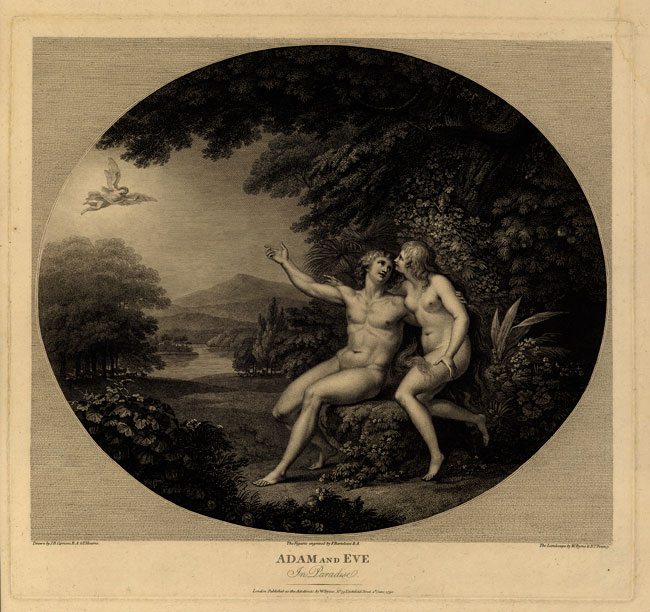
Accepting women's nakedness - Eve and the Garden of Eden


Eve was naked in the Garden of Eden.

We're used to those pictures where Adam and Eve have appropriately placed fig leaves. But until they ate from the forbidden fruit, Adam and Eve would not have been wearing them. They would have been well and truly naked.

And not naked, in a 'provocative, over-sexualised, look at me and ogle me' way. Naked in a 'this is who I am, exactly as God intended' way.

Unfortunately, it wasn't too long until they ate from the forbidden fruit. It was only after this that they tried to cover themselves with fig leaves. It was also after this, that they were removed from the garden and God made them coverings of animal skins. Remember, that Adam and Eve had already tried to cover themselves. And remember that God was quite happy for them to be naked before they ate the forbidden fruit. When God provided animal skins, I don't believe he was saying that they shouldn't be naked.

I should quickly clarify that I'm not about to suggest we all start stripping off our clothes. What I am suggesting is that maybe we need to get a lot more comfortable with women's nakedness - not in the sense of wearing no clothes, but of accepting all aspects of a woman's body.

Imagine for a moment that they didn't eat the forbidden fruit, that Eve remained in the Garden of Eden in her naked state.

She would have gotten her periods, had babies, breastfed. She may have even talked about her vagina! I imagine during the birth of her babies, it may have come up in conversation. She would have grown old. Her tummy would not have been so flat anymore. Her breasts would not have been so perky. She would have gotten wrinkles and grey hairs.

And I kind of think Adam and God would have been cool with that. In fact, I kind of think that if Adam had even thought of complaining, God would have been very quick to tell him, I made her that way.

This is no airbrushed, photoshopped version of Eve's nakedness. It's real nakedness. It's nakedness where nothing about a woman has to be hidden away. It's a nakedness where a woman's natural ageing processes and natural nurturing functions are on view and accepted.

We're a long way from the Garden of Eden.

Last year, a US politician was banned from addressing the Michigan House of Representatives after using the word 'vagina'.

Last week, a woman was told to stop breastfeeding her baby at a public pool. Sunrise host, David Koch, said women should be 'discreet' and 'classy' when breastfeeding in public.

Yesterday, Mama Mia gave a thumbs-up to Nigella Lawson for refusing to allow her tummy to be photoshopped out. (http://www.mamamia.com.au/social/nigella-lawson-and-a-big-photoshop-win/). What's sad about this is the fact that they even want to photoshop tummies out. 

But then someone refusing to be photoshopped is news. The large amount of photoshopping that goes on every day (removing wrinkles, tummies and anything else considered unattractive) is not. It's too common to rate a mention.

We live in a world where there's quite a large amount of women's flesh on show. But it's not real women's flesh. It's not wormen-affirming flesh. It's flesh where all the faults have been removed. It's flesh that is well-presented and 'perfected'. It's flesh that's there to be looked at. (And I use the word 'flesh' intentionally here, because that's what it seems like - that women are just flesh.)

And if we dare to show women's bodies in a way that shows they're not flesh, that they actually are designed for something so much more important than being looked at, we are told to do it in a way that's classy and discreet - presumably not to offend anyone who might be 'looking' at us.

I suspect that Adam liked looking at Eve's body. And I suspect God did too. But it was an appreciation borne out of seeing Eve as she really was, and understanding her as a person and not just something to be ogled. It was an appreciation that could accept Eve in her true naked form.

We can't return to the Garden of Eve. But may we all learn to accept women's nakedness a little bit more - without necessarily taking off any clothes J  

Saturday, January 19, 2013

Religious sensitivities and anti-discrimination laws


A new bill by the Australian Labor Party will give religious organisations in Australia the right to discriminate against those who might cause "injury to the religious sensitivities of adherents of that religion."

It seems that the press wanted to present this in as controversial a way as possible, with many news outlets reporting that religious organisations were free to discriminate against those they considered 'sinners', which is not the actual wording used - and makes no sense at all in a Christian context, as we are all sinners.

However, one might well ask what does "injury to the religious sensitivities of adherents of that religion" actually mean?

I am a Christian. And I can think of no person whose employment would cause injury to my religious sensitivities. As a Christian, though, who believes God's love and compassion extends to all people, I do feel my religious sensitivities may be injured should someone be refused employment on the basis of sexuality, gender, marital status or religion.

The same stories that used the word 'sinners' also said:

"Under current exemptions to legislation, religious groups can reject employees for being gay, single parents or living "in sin"." (Read more: http://www.news.com.au/breaking-news/national/sinner-story-a-beat-up-christian-lobby/story-e6frfku9-1226554925167#ixzz2IPSaHuB6)

So are these the type of people who would injure 'religious sensitivities'? I would say no. But at the same time, I fear that it is these kinds of people that will be discriminated against.

Jim Wallace from the Australian Christian Lobby explains it differently. He says it's not a matter of vetting people, but of employing people who share the same beliefs. He gives the example that an environmental organisation would not employ someone who was an 'ardent logger'.

The difference is, of course, that environmental organisations (quite rightly) are subject to discrimination laws.

And however it's painted, in practice, I fear it's going to be used mainly as an excuse refuse employment to homosexuals.

And quite frankly I don't think that's right and I don't think that's Christian. For a start, why is that many (certainly not all, but many) Christian churches focus on this one group of people? They'll employ just about anybody and accept just about anybody - except for homosexuals.

I have heard many Christians say that a person cannot be a Christian and a homosexual. Why not? Even if they do believe it's a sin - there's lots of sins mentioned in the bible. I think it's safe to say that we're all guilty of at least one of them - and I include in there the sins mentioned as abominations. Lying is an abomination. Women wearing men's clothing is an abomination. There's lots of them. (For a full list of them all, go here: http://richardwaynegarganta.com/abomination.htm)

I'm pretty sure that there aren't too many people who are being refused employment by a Christian organisation for cheating or lying or oppressing the poor. We're perfectly willing to employ those people. But homosexuals, no, can't be done. That would offend our religious sensitivities.

And I do understand that some Christian organisations (such as schools) want to employ people who share those Christian beliefs. That does make sense. But if it ends up getting used mostly as an excuse to discrimination against people, then that's not right.

We believe in a God who has created us all and loves us all. We have the example of the Good Samaritan to show that even the people we detest may end up being the ones who do a lot better job of loving their neighbour than the 'right' people do. We have what might be considered an anti-discrimination verse in Galatians 3:28: ' There is neither Jew nor Gentile, neither slave nor free,nor is there male and female, for you are all one in Christ Jesus.'

We also have a lot of bible verses and passages that tell us not to be judgmental, Matthew 7:1-5 being just one of them:

“Do not judge, or you too will be judged. For in the same way you judge others, you will be judged, and with the measure you use, it will be measured to you.
“Why do you look at the speck of sawdust in your brother’s eye and pay no attention to the plank in your own eye? How can you say to your brother, ‘Let me take the speck out of your eye,’ when all the time there is a plank in your own eye? You hypocrite, first take the plank out of your own eye, and then you will see clearly to remove the speck from your brother’s eye."

Christians should be the people who accept others, the people who love others, the people who are least likely to judge others. We should be the least likely to discriminate, not the legal exception to anti-discrimination laws.  

I do realise that the press has probably not done the best job in reporting this story. Controversial stories sell more papers - I should know, I bought one myself when I saw the front page of The Canberra Times. And I also realise that there are many religious organisations who do not discriminate based on age, gender, sexuality, race or religion.

However, I also wonder how the average Australian sees the church at this time. Do they see a church that is accepting and welcoming, that represents a God that loves them? Or do they see a church that wants to exclude people and that dislikes certain groups of people? And which one really is more representative of the God who created everyone, who loves everyone and his son, Jesus Christ, who died for everyone?


(Picture taken from "Religious groups free to discriminate" on www.smh.com.au -  http://www.smh.com.au/opinion/political-news/religious-groups-free-to-discriminate-20130115-2crlw.html)

AddThis

Bookmark and Share

Blog Patrol